
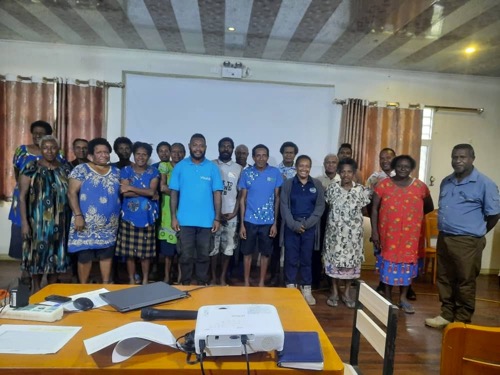
The ECPNG Health Service Lower Fly Staffs from Balimo, Awaba, Mapodo, Wasua, Adiba and Wawoi Falls participated in the 2 days training on the Supplementary Immunization Activity (SIA) on Measles-Rubella, Polio and Vitamin A, which will be a cooperative effort by WPHA, the Delta Fly District Health Service and partners SDP Health, World Vision and others, with support from UNICEF, WHO and Gavi and will go for five weeks.
Every year, thousands of babies are born in Papua New Guinea and sadly many of these babies die before they reach their fifth birthday. One of the causes is due to diseases that are preventable through immunization. These includes measles, polio, whooping cough and tetanus.
Currently, PNG’s immunization coverage rate stands below 50 percent, with some provinces having even as low as 25 per which is a great concern.
The objectives of the Measles-Rubella immunization include:
• Vaccinating all children aged 6 – 59 months with one dose of MR vaccine, irrespective of their previous vaccination status. A total of 1.2 million children (12.5 per cent of total population)
• Vaccinating all children aged 0 to 59 months with one dose of bOPV, irrespective of their previous vaccination status. A total of 1.3 million children (14.5 per cent of total population)
• Provide Vitamin A supplementation to all children aged 6 to 59 months
• Strengthen Routine Immunization and follow Routine Immunization-focus campaign in selected districts aiming at catching up large number of zero dose children.
Supplementary Immunization Activities, also referred to as mass-immunization campaign is an effective strategy for delivering vaccination to children who have missed out due to varying reasons such as coming from hard-to-reach areas, have never been taken for immunization or, zero dose and underserved groups and communities or to older susceptible individuals who are not among the age groups targeted by the routine Expanded Programme Immunization (EPI) services.
As such, SIA have the effect of rapidly increasing population immunity by reducing the susceptible individuals in the population, which can result in protective “herd” immunity.’’
Other benefits include building national capacity, reducing inequity of service delivery, advocating for Routine Immunization, improving immunization practices and providing further published health benefits through integration of other public health interventions with the SIA.